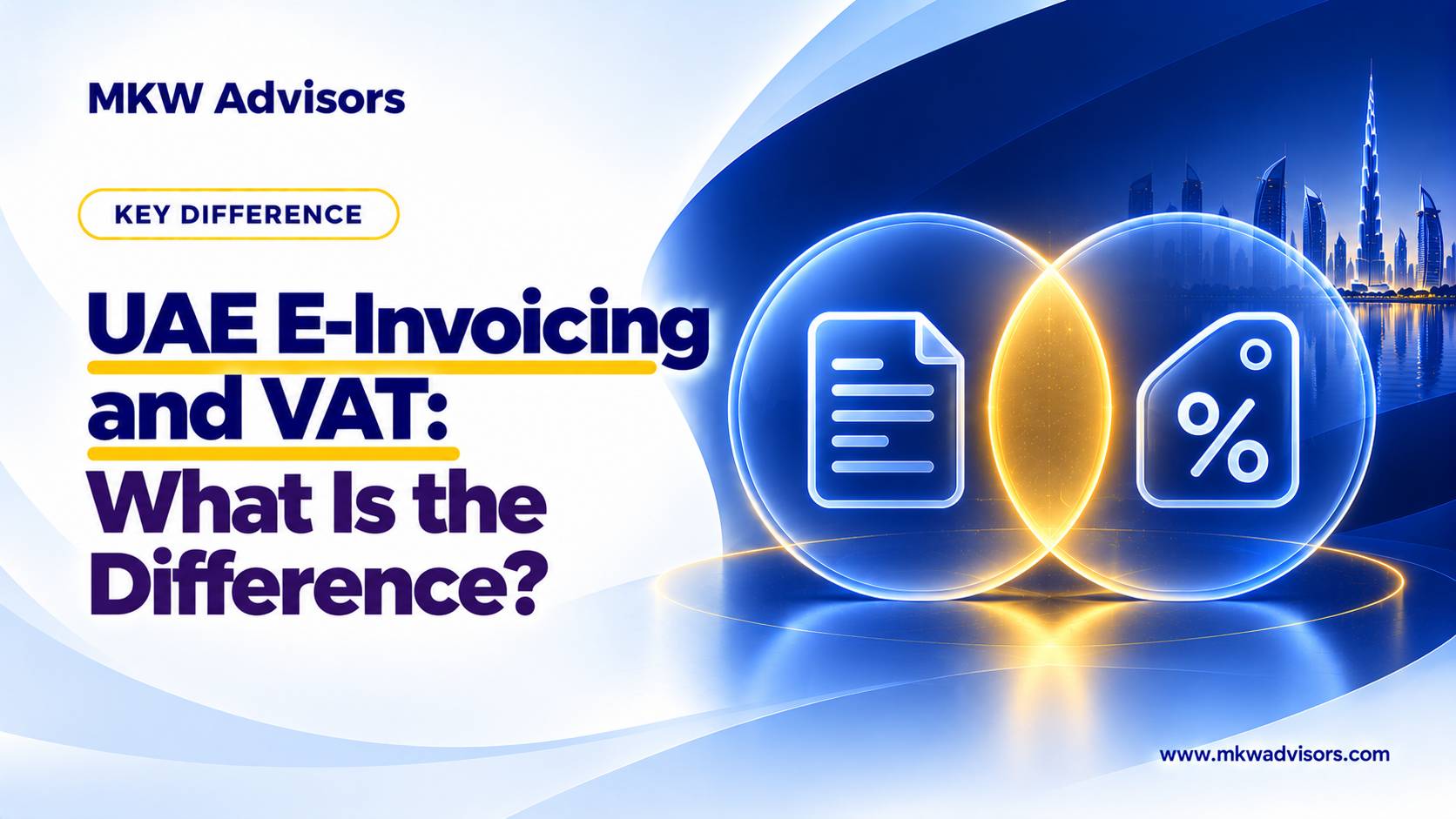
VAT and e-invoicing are related but distinct. UAE VAT rules decide whether a transaction is taxable, at what treatment, how tax is calculated and which records and returns are required. E-invoicing rules decide how invoice data is structured, exchanged through Accredited Service Providers and reported under the framework. E-invoicing does not replace VAT returns, and technical acceptance of an invoice does not prove its VAT treatment is correct.
Why this matters now. When e-invoicing goes live, tax codes stop being an internal label and become data transmitted to the FTA. A wrong code that used to be fixed at return time now travels with every invoice.
What does VAT address?
Taxability, treatment, calculation, registration, record-keeping and returns, under current UAE law and the facts of each transaction.
What does e-invoicing address?
The structured electronic process for invoice data: format (PINT AE), exchange (four-corner model), reporting. It does not decide whether a transaction is taxable or which rate applies.
How do they interact?
Invoice data carries tax information. An incorrect tax code in your accounting system flows into the structured invoice and the reported data. An ASP validates format, not tax law, so technical acceptance and tax correctness are two different checks.
Which controls keep both right?
- One tax-code list with a named owner.
- Qualified review of uncertain treatments before they are coded.
- Master data and invoice mapping checked together, not separately.
- A change process for tax codes, credit notes and corrections.
- Monthly reconciliation of invoiced tax data against the return.
Worked example: accepted, but wrong
A training company codes an overseas client’s invoice with its domestic tax code. The structured invoice is complete and consistent, so the ASP accepts and transmits it. The data reported carries the wrong treatment, and the error only surfaces when the adviser prepares the return. Under PDF invoicing the same mistake would have been corrected quietly at return time; under e-invoicing it has already been transmitted and reported, and now needs a credit note and a reissue. The fix was never technical: it was a tax-code review before go-live.
A simple division of responsibilities
| Question | Who answers it |
|---|---|
| Is this transaction taxable, and how? | Tax adviser |
| Which tax code represents that treatment in our system? | Finance lead with adviser |
| Is the invoice data complete and consistent? | Finance lead / bookkeeper |
| Does the structured invoice validate and transmit? | ASP |
| Does the invoiced tax data reconcile to the return? | Finance lead with adviser, monthly |
Mistakes to avoid
- Assuming “the ASP accepted it” means the VAT is right.
- Letting the e-invoicing project and the tax adviser work apart.
- Treating e-invoicing as a replacement for VAT filing.
Frequently asked questions
Does UAE e-invoicing replace VAT returns? No. They are distinct processes; returns remain a separate obligation.
Does technical acceptance of an e-invoice prove the VAT treatment is correct? No. Format validation and tax analysis are different checks.
Who should review tax codes before e-invoicing go-live? A qualified tax adviser, working with the finance owner responsible for master data.
Key takeaways
- VAT = tax treatment; e-invoicing = structured exchange and reporting.
- Tax codes travel with every e-invoice, so fix them at source.
- Five controls keep tax treatment and invoice data aligned.
How MKW Advisors can help
Want your tax codes, master data and invoice mapping reviewed together before go-live? WhatsApp MKW Advisors on +91 96677 44073. We handle the accounting side and coordinate with your tax adviser. Next read: Monthly Bookkeeping Checklist (Blog 25).
If your business is reviewing UAE e-invoicing readiness, accounting workflows, Zoho Books setup or monthly bookkeeping, MKW Advisors can discuss your requirements and the support that may be appropriate. Any e-invoicing network services should be provided through a service provider whose current accreditation has been verified in the official UAE Ministry of Finance directory.
Call or WhatsApp MKW Advisors: +91 96677 44073
This article is for general information only and is not legal, tax or accounting advice for a specific transaction. Requirements may change. Confirm current rules and obtain qualified professional advice where needed.
Related guides
- UAE E-Invoicing 2026–2027: Complete Guide for Businesses
- E-Invoicing Implementation Services in Dubai: What to Look For
Official sources and further reading
- UAE Ministry of Finance — official eInvoicing portal and guidance
- MoF — Accredited eInvoicing Service Providers directory
- MoF — October 2026 amendment to eInvoicing regulations
- MoF — UAE 4-corner eInvoicing model
- MoF — ASP accreditation framework update, October 2026
- UAE Federal Tax Authority — eInvoicing